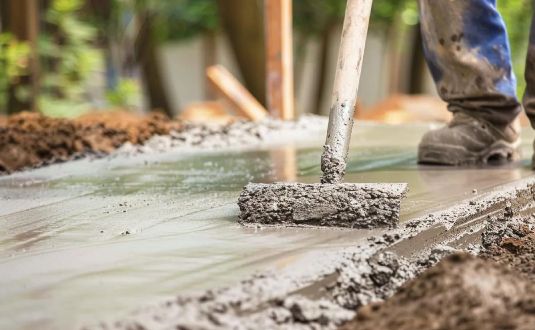
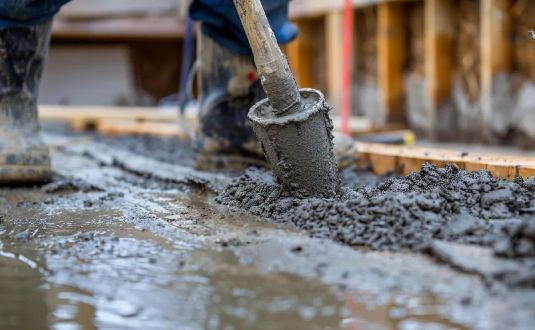
Fiberglass improves concrete strength by reinforcing the mix with thin fibers that help control cracking and increase durability. The fibers reduce shrinkage cracks, improve impact resistance, and help the concrete hold together under stress. This makes fiberglass-reinforced concrete stronger for slabs, driveways, and high-traffic surfaces.*
We will cover the science behind it, why it beats traditional methods like rebar, and how it holds up against Alabama's weather. We will also share what we have learned from over 15 years of pouring high-performance concrete throughout Madison, Decatur, Athens, and the greater Huntsville area.
What Is Fiberglass Reinforced Concrete?
Fiberglass reinforced concrete (FRC) is regular concrete mixed with tiny glass fibers. These fibers spread evenly through the entire mix. Think of it like adding millions of tiny threads that hold everything together from the inside out.
The Basic Idea Behind Fiber Reinforcement
Concrete is very strong when you push on it. This is called compressive strength. But concrete is weak when you pull on it or bend it. This is called tensile strength. The problem? Most concrete damage like cracks happens because of tension and bending, not compression.
Glass fibers fix this problem. They act like tiny bridges inside the concrete. When the concrete tries to crack, these fibers hold the two sides together. The crack stays small or does not form at all.
Types of Glass Fibers Used in Concrete
Not all glass fibers work the same way in concrete. The best type is called alkali-resistant (AR) glass fiber. Regular glass breaks down in concrete because concrete is very alkaline. AR glass has a special coating that protects it from this breakdown.
Here in Huntsville, we use a proprietary blend we call SFGIC Steel Fiber Glass Infused Concrete. This mix combines both steel and fiberglass fibers. The result? Up to 122% more tensile strength compared to regular concrete. That is not a typo. Our fiberglass-infused concrete delivers strength you can actually see and feel.
How Much Stronger Does Fiberglass Make Concrete?
The numbers speak for themselves. Research shows clear gains across multiple strength measurements when you add glass fibers to concrete.
Tensile Strength Improvements
Tensile strength is the ability to resist pulling forces. This matters because cracks form when concrete gets pulled apart. Studies from the National Institutes of Health found that adding just 0.1% glass fiber to concrete increases splitting tensile strength by 42.23% after 28 days of curing.
Other research shows even bigger gains. When fiber content increases from 0% to 1.2% by weight, tensile strength can jump from 3.06 MPa to 4.92 MPa. That is a 60% increase.
Compressive Strength Gains
Compressive strength is what most people think of when they talk about "strong concrete." Regular concrete typically reaches 3,000 to 4,000 PSI. With the right fiber mix, that number can climb to 8,000 PSI roughly 60% stronger.
However, compressive strength gains depend on getting the mix right. Too many fibers can actually reduce workability and trap air pockets, which hurts strength. The sweet spot for glass fiber content is around 1.5% to 2.0% by weight of cement.
Flexural Strength Benefits
Flexural strength measures how well concrete bends without breaking. This matters for driveways that support heavy trucks, patios where furniture sits, and sidewalks that handle foot traffic. Research shows flexural strength can increase from 4.84 MPa to 7.27 MPa a 50% gain when glass fiber content reaches 1.2%.
Here at Bullet Proof Concrete, we have seen these numbers play out in real projects across the Tennessee Valley. Our SFGIC mix delivers 111% more flexural strength than what most contractors pour in Madison and Decatur. That means thinner slabs can do the same job as thicker ones saving you money without sacrificing performance.
Why Fiberglass Beats Traditional Rebar for Residential Projects
Steel rebar has been the go-to concrete reinforcement for over a century. It works well for large structures like bridges and buildings. But for residential projects like driveways, patios, and sidewalks, fiberglass reinforcement offers real advantages.
No Rust, No Problems
Steel rusts. Period. When moisture gets into concrete and in Alabama's humidity, it will steel rebar starts to corrode. Rust expands, pushing against the concrete from the inside. This causes cracks and spalling (those ugly patches where concrete flakes off the surface).
Fiberglass does not rust. It cannot corrode. This makes it perfect for outdoor concrete in Huntsville, where summer humidity regularly tops 70% and thunderstorms dump heavy rain. Your outdoor kitchen foundation or pool deck stays solid for decades.
Even Distribution Throughout the Slab
Rebar only reinforces where you place it. If the rebar grid shifts during the pour and it often does you end up with weak spots. Fibers mix throughout the entire concrete. Every square inch gets reinforcement, top to bottom, edge to edge.
This even distribution is why fiber-reinforced concrete shows 75% fewer microcracks than traditional mixes. The fibers catch cracks before they start, no matter where they try to form.
Faster Installation, Lower Labor Costs
Placing rebar takes time. Workers have to tie bars together, set them at the right height, and keep them in place during the pour. With fiber reinforcement, the fibers go directly into the mix. Pour and finish that is it.
Our projects using SFGIC typically install 20-30% faster than traditional rebar jobs. That means less disruption to your household and lower labor costs that we pass on to you.
How Fiberglass Reinforcement Handles North Alabama Weather
Huntsville sits in a unique climate zone. We get hot, humid summers that push 90°F or higher. We get occasional winter freezes that drop into the 20s. And we get plenty of rain around 54 inches per year. This combination stresses concrete in ways that homeowners in other parts of the country never deal with.
Surviving Freeze-Thaw Cycles
When water soaks into concrete and then freezes, it expands by about 9%. This expansion creates pressure inside the concrete. Thaw it out, and the water seeps deeper. Freeze it again, and the pressure builds. Each cycle makes cracks bigger.
North Alabama typically experiences 30-40 freeze-thaw cycles per winter. That is enough to cause scaling, cracking, and spalling in regular concrete over a few years. Fiberglass reinforcement fights back in two ways. First, the fibers bridge cracks as they try to form. Second, the denser fiber-reinforced mix absorbs up to 65% less water, so there is less moisture inside to freeze in the first place.
Standing Up to Alabama Heat and Humidity
Hot weather makes concrete cure faster, which sounds good but can cause problems. Fast curing creates surface tension that leads to plastic shrinkage cracks those hairline cracks you see within hours of a pour. Fiberglass fibers control this shrinkage by distributing stress throughout the mix.
Our SFGIC mix handles Alabama summers like it was designed for them because it was. Isaac Bussey, the founder of Bullet Proof Concrete, developed this blend specifically for the challenges we face here in the Tennessee Valley. The result is concrete that cures evenly and stays crack-free even when poured in July.
Handling Heavy Rain and Drainage
Huntsville averages over 50 inches of rain per year. That is more than Seattle. All that water needs somewhere to go, and if your concrete is too porous, it goes right through your driveway or patio and undermines the base beneath.
Glass fiber reinforcement reduces water absorption dramatically. The fibers fill microscopic voids in the mix, creating a denser final product. This density keeps water on the surface where proper grading can direct it away from your foundation. Combine this with proper retaining walls and drainage planning, and you protect your entire property.
Real Results From Huntsville and Madison Projects
Numbers on paper are one thing. Results in the field are what really matter. Here is what we have seen across hundreds of projects in North Alabama.
Driveway Performance Over Time
Traditional concrete driveways in the Huntsville area typically need their first repairs within 5-7 years. Cracks form, surface scaling starts, and expansion joints fail. Homeowners end up patching and sealing constantly or just living with an ugly driveway.
Our SFGIC driveways have a different story. We have projects in Hampton Cove and Owens Cross Roads that are over two years old with zero cracks. Not hairline cracks, not controlled cracks at expansion joints zero cracks. The fiber bridging technology really works.
Patio and Outdoor Living Spaces
Patios take heavy abuse. Patio furniture legs concentrate weight in tiny spots. Grills drip grease. Kids drag toys across the surface. Add in temperature swings and moisture, and standard concrete often looks rough within a few seasons.
The stamped concrete patios we pour in Meridianville and Harvest hold their pattern and color far longer than traditional work. The fibers help the decorative surface stay bonded to the base layer underneath, preventing that peeling effect you see on older stamped patios around town.
Foundation and Structural Applications
Foundations demand the most from concrete. They support your entire home. They contact soil that shifts with moisture changes. They need to last as long as the house stands.
Our SFGIC foundations in Athens and Decatur meet compressive strengths that exceed code requirements by a wide margin. More importantly, they resist the kind of hairline cracking that lets water infiltrate basement walls. When Isaac and the team pour a pergola foundation or outdoor structure base, they build it to last 50 years or more.
The Science Behind Fiber Bridging Technology
Understanding how fibers actually work helps explain why the results are so dramatic. It comes down to basic physics and materials science.
How Cracks Form in Regular Concrete
Concrete cracks happen when internal stress exceeds the concrete's tensile strength. These stresses come from many sources: shrinkage during curing, thermal expansion and contraction, load pressure from above, and soil movement from below.
In regular concrete, once a crack starts, nothing stops it. The crack tip concentrates stress, which makes the crack grow longer. Small cracks become big cracks. Big cracks become structural problems.
How Fibers Stop Crack Growth
Glass fibers interrupt this process. When a crack tries to form, it runs into fibers that span the crack opening. These fibers absorb and redistribute the stress that was concentrated at the crack tip. The crack cannot grow because the fibers hold the two sides together.
This is called "fiber bridging," and research confirms its effectiveness. Studies show that fibers can reduce crack width by up to 90% and total crack area by similar amounts. The cracks that do form stay so small they are essentially harmless.
Why Fiber Distribution Matters
The fibers only work if they are spread evenly throughout the mix. Clumps of fiber create weak spots. Uneven distribution leaves some areas unprotected.
This is why mixing technique matters so much. At Bullet Proof Concrete, we use computer-controlled mixing to ensure consistent fiber distribution in every batch. Every cubic yard of SFGIC that leaves our operation has the same strength and crack resistance.
Comparing Fiberglass to Other Reinforcement Options
Fiberglass is not the only fiber option for concrete reinforcement. Understanding how it compares to alternatives helps you make the right choice for your project.
Fiberglass vs. Steel Fibers
Steel fibers offer excellent tensile strength and work well in heavy-duty industrial applications. However, they can corrode over time, especially in wet environments. They also tend to show through the surface, which looks rough on decorative work.
Glass fibers offer similar strength benefits without the corrosion risk. They stay below the surface when finished properly, making them ideal for stamped or decorative concrete. Our SFGIC blend uses both steel and glass fibers, combining their strengths while minimizing their weaknesses.
Fiberglass vs. Polypropylene Fibers
Polypropylene (plastic) fibers are cheaper than glass fibers. They help control plastic shrinkage cracking during the first 24 hours after pouring. However, they add little long-term tensile strength to the cured concrete.
Glass fibers cost more but deliver permanent strength improvements. They work during curing and for the entire life of the concrete. For projects that need to last decades which should be all of them glass fibers are worth the investment.
Fiberglass vs. Basalt Fibers
Basalt fibers are a newer option made from volcanic rock. They offer good strength and chemical resistance. However, they cost significantly more than glass fibers and offer similar performance for residential applications. Until prices come down, glass fibers remain the better value.
What to Expect When You Choose Fiber-Reinforced Concrete
Switching from traditional concrete to fiber-reinforced concrete changes a few things about your project. Here is what Huntsville-area homeowners should know.
Cost Considerations
Fiber-reinforced concrete costs 15-30% more than basic concrete with rebar. That premium covers the fibers themselves plus the expertise needed to mix and pour them correctly.
However, this upfront cost pays back over time. You spend less on repairs. You avoid premature replacement. You get 50+ years of service instead of 15-25 years. When you calculate total cost of ownership, fiber-reinforced concrete often costs less than traditional concrete over the life of your home.
Installation Timeline
Most fiber-reinforced concrete projects install faster than traditional work because there is no rebar to place. A typical residential driveway in Hazel Green or Madison takes one day to pour and finish. Curing takes the standard 28 days for full strength, though you can usually walk on it within 24 hours and drive on it within a week.
Appearance and Finish Options
Fiber-reinforced concrete can be finished in all the same ways as regular concrete. Smooth trowel finish? No problem. Broom finish for traction? Easy. Decorative stamped patterns? Absolutely. The fibers stay below the surface when proper finishing techniques are used.
The only difference you might notice is that fiber-reinforced concrete holds decorative finishes better over time. Stamped patterns stay crisp. Color stays consistent. You get the look you paid for, and it lasts.
Frequently Asked Questions
Does Fiberglass Completely Replace Rebar in Concrete?
For most residential applications like driveways, patios, sidewalks, and foundations, yes fiberglass can replace rebar entirely. The fiber matrix provides internal reinforcement throughout the slab. However, some structural applications still benefit from rebar, particularly where extreme loads or specific building codes require it. Our team evaluates each project and recommends the best approach for your specific situation.
How Long Does Fiberglass Reinforced Concrete Last?
With proper installation and mix design, fiber-reinforced concrete can last 50 years or more with minimal maintenance. This lifespan is two to three times longer than traditional concrete, which typically needs major repairs or replacement within 15-25 years. The reduced cracking and water resistance are the main reasons for this extended durability.
Can You See the Fibers in the Finished Surface?
No, not with proper finishing technique. The glass fibers used in quality mixes have the same density as the sand and aggregate in concrete. When finished correctly, they settle below the surface. You get a smooth, clean finish that looks like traditional concrete but performs much better.
Is Fiber Reinforced Concrete Worth the Extra Cost?
For homeowners who plan to stay in their home long-term, the answer is almost always yes. The upfront premium of 15-30% pays back through reduced repairs, longer service life, and better appearance retention. Homeowners who plan to sell within a few years might weigh the decision differently, though fiber-reinforced concrete can be a selling point.
Does It Work in All Weather Conditions?
Yes, fiber-reinforced concrete handles hot, cold, wet, and dry conditions better than traditional concrete. The reduced water absorption improves freeze-thaw resistance. The fiber bridging controls thermal cracking. Here in North Alabama, where we deal with everything from 95°F summer days to occasional winter freezes, these properties make a real difference.
Final Thoughts
Fiberglass reinforcement transforms ordinary concrete into something far stronger and more durable. The science is clear: tensile strength increases by 40% or more, cracking drops by up to 75%, and service life extends from decades to generations. For homeowners in Huntsville, Madison, Athens, Decatur, and throughout North Alabama, these benefits translate into real savings and real peace of mind.
At Bullet Proof Concrete, we have built our entire business around this technology. Our SFGIC mix delivers 122% more tensile strength and 111% more flexural strength than standard concrete. We have seen it perform across hundreds of projects in the Tennessee Valley, from downtown Huntsville driveways to Hampton Cove outdoor living spaces.
If you are planning a concrete project, you owe it to yourself to at least consider fiber reinforcement. The initial investment pays dividends for years. The performance speaks for itself. And once you see how your concrete holds up compared to your neighbors, you will understand why we call it Bullet Proof.
Ready to talk about your project? Contact us for a free estimate. We serve Huntsville, Madison, Decatur, Athens, Hazel Green, Harvest, Meridianville, Owens Cross Roads, Hampton Cove, and surrounding communities throughout North Alabama. Call (256) 663-8009 or visit our website to get started.
C30 concrete is about 20% stronger than C25, so it handles heavier loads and tougher conditions with less cracking. C25 works great for most Huntsville driveways, patios, and sidewalks, while C30 is better for foundations, retaining walls, RV parking areas, and high-stress slabs where Alabama clay soil and weather can cause shifting over time.
Glass fiber reinforced concrete offers major benefits like higher tensile strength, better crack control, lighter weight, and long-term durability. The fibers create internal reinforcement throughout the slab, helping concrete resist stress, shrinkage, and weather damage, making it ideal for driveways, patios, and outdoor projects in North Alabama.
The cheapest ways to level a concrete slab are grinding (for small high spots) and mudjacking (for sunken slabs). Self-leveling compound is also affordable for shallow indoor dips, and polyurethane foam injection can be cost-effective for small areas where you want a longer-lasting lift.
Pouring new concrete over old is possible when the existing slab is clean, level, and structurally sound. Prep by degreasing, pressure washing, repairing small cracks, roughening the surface, and using a bonding agent. Pour the right thickness, finish well, and cure for long life. Avoid slabs that sink or have wide cracks early.

.png)
.png)
.png)

.png)

.png)
.webp)

.webp)